
Introduction
Are you an SEO professional or agency owner having trouble showing the real results of your link-building work? You’re not alone. With data coming in from tools like Ahrefs, GSC, and GA4, it’s easy to feel overwhelmed, especially when clients expect direct, simple answers:
“How do these backlinks translate into revenue, leads, or real business growth?”
For many in SEO, the real challenge isn’t getting good links, but showing their impact. Explaining technical results to non-SEO stakeholders can feel like talking in code. If your reports aren’t clear, even the best campaigns can seem unclear, making it hard to prove value or justify continued investment in link building.
Reporting builds trust by demonstrating your value, strengthening relationships, supporting sound decision-making, and keeping clients loyal.
This guide will help you rethink how you report on different types of link building by focusing on actionable strategies and proven approaches.. Instead of just sharing lots of data, you’ll learn to:
- Identify and prioritise meaningful metrics.
- Align reporting with business outcomes.
- Turn link data into useful ideas you can act on
- Present information with clarity and confidence
- Strengthen client trust through transparency and education.
By the end, you’ll have a simple, practical plan for reporting that not only shows what you’ve done but also explains why it matters, bridging the gap that most SEO guides overlook. As an Off-Page SEO and Outreach Specialist, I’ve seen how effective reporting can transform client relationships, and I want to share the distinct tools, tips, and mindset that have most impacted my work.
Transform your reports into tools that win clients. Start now and see results.
Why Link Building Reporting Matters
Defining Link Building Reporting
Link building reporting is the structured process of analyzing and presenting how backlink acquisition impacts performance. More than a monthly list of links, it demonstrates the value of your work, clarifies your strategy, and connects SEO efforts to business outcomes.
Effective link-building reporting solves a key communication problem: turning complex data into useful information for decision-makers. When done right, it connects the work happening in the background to the results that matter to clients.
Strong link-building reports support four key objectives:
- Proving Value: Demonstrate the ROI of link-building efforts. Show how new backlinks contribute to improved rankings, traffic growth, and conversions.
- Guiding Strategy: Use data to see what is working, find areas for broken link improvement, and plan future outreach more effectively.
- Gain Client Trust: Give clear, regular reports to show clients their investment is working. Help them see you as a trusted partner, not just a service provider.
- Support Internal Alignment: Ensure everyone, from SEO experts to marketing managers to leaders, understands how link building supports business goals.
In the end, link-building reporting is more than tracking progress; it’s about showing why the work matters. As the industry shifts toward data-driven results, effective reporting is essential. It builds trust, strengthens relationships, and drives long-term campaign success.
Beyond the “What”: Understanding the “Why” of Reporting
Effective link-building reporting is not just another task to complete. It is a valuable tool. When done right, reporting helps agencies, in-house teams, and others get the clarity, agreement, and proof they need. Data by itself does not help clients move forward. Understanding the data does. Reporting is what turns raw backlink metrics into useful business information.
Link-building reports support four critical functions:
1. Demonstrating ROI & Business Impact
One of the biggest challenges for SEO professionals is demonstrating how link building drives real results, such as increased revenue, leads, or sales opportunities. While backlinks and internal linking help with rankings and visibility, the business impact can seem unclear unless it is explained well.
Connecting link building wins directly to tangible business performance. Prove expertise by showcasing real-world examples where strengthened backlink profiles contributed to improvements in rankings, traffic, conversions, or assisted revenue.
💡Expert Tip: Always connect link-building metrics, such as authority scores, referring websites, or increases in organic traffic, to a main business goal. When you can, use client-specific key numbers that show the real business results from the links.
2. Identifying Successes & Informing Future Campaigns
Reporting is not just about showing results. It also helps decide what to do next. Performance data shows which types of links, content, and outreach work best to build external links.
When teams know what worked and why, they can do more of what works well and stop what does not. This improves campaign performance and helps teams make decisions based on facts rather than guesses.
3. Building Strong Client Relationships & Managing Expectations
If reporting is unclear and inconsistent, even very successful link building can seem invisible to clients. This is when trust drops, and budgets are doubted. Good reports show progress, admit challenges, and support the plan. This builds trust and helps keep clients.
Clients need ongoing reassurance that link building is working, especially during long-term initiatives.
💡Expert Tip: Be open from the start. When you begin working together, explain how you will measure success, what reports will look like, when they will be shared, and what results to expect. Make it clear that link building adds more value over time. Being clear now means fewer problems later.
Good reports show progress, admit challenges, and support the plan. This builds trust and helps keep clients.
4. Driving Internal Accountability & Optimization
Reporting isn’t just outward-facing. Internally, it aligns outreach specialists, strategists, writers, and leadership around shared goals and benchmarks. When teams see clear performance results, they know what to focus on, understand how they support the broader marketing plan, and take greater responsibility. The result is faster improvements, smoother teamwork, and better results.
In short, great reporting does more than just show what happened. It explains why, how, and what to do next. It clarifies the purpose, strengthens the plan, and shows why link building supports long-term growth.
Mastering Your Data: Key Metrics, Tools & Collection Best Practices
Essential Metrics for Comprehensive Link Building Reports
Effective link-building reports count links, show their quality, relevance, and results, making the impact clear to clients. Here are the core metrics every comprehensive link-building report should include:
| Metric | Definition | Why It Matters | Tools to Track |
| Referring Domains | Number of websites linking to your site. | Shows how diverse your backlink profile is. More sites linking to you means increased trust and recognition. | Ahrefs, SEMrush, Google Search Console & Majestic |
| New Backlinks | The number of new links gained during a set time frame. | Shows that the campaign is moving forward and making progress in getting more links. | Ahrefs, SEMrush & Majestic |
| Lost Backlinks | Links that no longer work or have been removed. | Helps diagnose problems such as missing content or pages that do not work, and checks whether links remain functional over time. | Ahrefs, SEMrush |
| Domain Rating (DR/DA/Authority Score) | Ways to measure how strong or important the websites linking to you are, but remember it’s a third-party metric. | Websites that are more trusted usually have a bigger impact on rankings and are seen as more reliable, which is an important sign of good links. | Ahrefs (DR), Moz (DA), SEMrush (Authority Score) |
| Anchor Text Distribution | The words or phrases used in links from other websites that lead to your site. | Diverse, natural link texts lower risk and keep content on topic. Over-controlling links can harm your site. | Ahrefs, SEMrush |
| Organic Traffic Impact | Changes in the number of visitors(Organic) to certain pages or sections from search engines. | Shows what link-building really does: more people notice your business and more users sign up, not just changes in search results. Showing changes in website visits demonstrates how link-building helps people discover your business. | Google Analytics 4, Google Search Console |
| Keyword Rankings | Movement in rankings for target keywords is influenced by link building. | A direct indicator of improved strategic or commercial search visibility. | Ahrefs, SEMrush, Google Search Console |
| Brand Mentions | Unlinked brand mentions online. | Builds brand reputation, earns more links, and demonstrates trustworthiness without direct links. | Ahrefs Content Explorer & SEMrush Brand Monitoring |
| Referral Traffic Quality | Backlink user engagement metrics. | Links should be relevant to the source and audience to validate quality, not just authority. | Google Analytics 4 |
| Conversion Metrics | Organic/referral traffic goal completions. | Directly ties SEO to business ROI, revenue, and growth through advanced attribution. Expert Tip: Rely on client-specific conversion data when possible. | Google Analytics 4 (with conversion tracking) |
💡Tip: These tools are popular, but you can use any platforms that work well with how you and your client do things.
These metrics clearly show link quality, strategy, and business value. They turn technical reports into insights that drive understanding, trust, and action.
Data Collection & Tracking: Tools & Best Practices
Collecting accurate data is key to effective link-building reports. If your data is not reliable, even the best-looking report will not be useful. Using the right tools, keeping good records, and tracking your work helps you create reports people can trust.
Leveraging Industry-Leading SEO Platforms
Good reporting starts with high-quality tools. Trusted platforms help ensure your data is accurate and build your credibility with clients and others.
💡Tip: Use data from well-known SEO tools to back up your choices, so people trust your work and you do not have to guess.
Platform Recommendations:
- Ahrefs is great for closely examining backlinks, tracking new and lost links, counting the websites linking to you and their ratings, and watching your website traffic grow.
- SEMrush is useful for checking all your backlinks, analyzing your competitors’ backlinks, examining the words used in links, and tracking how your rankings change.
- Google Search Console provides verified Google data on which domains link to your site, tracks search query performance, and monitors indexation status.
- Google Analytics 4 (GA4) is important for understanding where your visitors come from, how they use your site, and how many complete key actions, such as purchases or sign-ups.
Using all these tools together gives you a complete view of your backlinks, rankings, and website traffic, which is the main part of your reports.
Data Consolidation & Management
After you collect your data, you need to organize it so you can study it and find it later.
Recommendations:
- Use Excel or Google Sheets to keep all your link data in one place, eliminate duplicates, perform simple calculations, and sort your links.
- Maintain a master link tracking spreadsheet that includes:
- Link URLs
- Status (active, broken, lost)
- Target pages
- Metrics (DR/DA, traffic, etc.)
- Outreach notes/status
- Use the same names and tags for everything to make your data clear and easy to find, which is especially helpful if you work with many clients or projects.
Ensure this database serves as a single source of truth for all future reports.
Best Practices for Accuracy & Consistency
To keep your data accurate over time, make these habits part of your reporting routine:
- Track metrics regularly, weekly, monthly, or quarterly for reliable comparisons.
- Compare your numbers across tools to spot anomalies and avoid mistakes in your reports.
- Document factors like algorithm updates or migrations to explain data spikes or drops.
These habits help make sure clients get reports they can trust and understand, not just random number changes.
Automation for Efficiency
Doing reports by hand is slow and prone to error. Using automation lets you spend more time thinking about what the data means and planning, which clients like.
💡Expert Tip: Make or use ready-made templates for things like pulling data, monthly reports, updating dashboards, and making performance summaries.
Automation Tools to Consider:
- AgencyAnalytics or similar tools for automated dashboards, scheduled reports, and client-facing visuals
- Swell AI or other AI tools to help you quickly combine, sum up, and format your data
With the right tools, reporting becomes less about hard work and more about useful ideas, which is important for keeping clients long-term.
Crafting Your Report: Structure, Visualization & Actionable Insights
Structuring Your Link Building Report: Essential Sections
A strong report does more than just show data. It leads the reader through a clear story. By using a clear structure, you help clients see not only what you did but also why it matters and what will happen next. Each section below helps turn complicated link-building work into useful advice for the business.
| Report Section | Purpose / Content | Key Questions It Answers |
| Executive Summary | A short summary of the main results from the reporting period: big successes, progress toward goals, and important lessons. Focus on how this affects the business rather than on small details, especially for top executives and people who need quick updates. | Identify our main successes. Specify if we met our goals. Highlight the most important points I need to act on. |
| Campaign Overview | Clearly state the campaign goals, identify the campaign audience, and specify the strategies used to secure links during this period. This clarifies the results and aligns expectations for everyone involved. | What specific goals did we set out to accomplish? Which key activities did we execute this month/quarter? |
| Progress & Performance | Present a detailed breakdown showing the number and quality of new referring domains, track lost links, record DR of new links, and evaluate anchor profiles or competitive comparisons. Display visual trendlines or MoM/ QoQ comparisons to emphasize momentum. Expert Tip: Prioritize analyzing trends over time rather than focusing solely on isolated data points to illustrate progress. | Assess how many links we built. Evaluate their strength. Track the growth of our backlink profile. |
| Impact & Outcomes | Shows how getting links is related to SEO and business results, like more website visitors, better keyword positions, more people coming from other sites, or more sales. This is where reports move from just showing what was done to showing real results and value. | Evaluate the impact of link building on traffic and visibility. Determine whether we are ranking higher and assess its impact on leads, sales, and revenue. |
| Qualitative Insights | Highlights important successes that numbers alone do not fully show, like top placements, brand mentions, online PR coverage, better feelings about the brand, or examples of good relationships with publishers. Expert Tip: Make your report stronger by adding background information. Show clients what a valuable link looks like and why it is important. | Identify standout coverage, notable mentions, and branded citations. Specify what constitutes a great link. |
| Learnings & Next Steps | Summarizes clear next steps, finds ways to make future outreach better, and explains the plan for the next reporting period. This shows that link building is a strategy that keeps growing and getting better, not just a one-time task. | What did we implement and learn this period? What specific actions will we change next month or quarter? What concrete steps define our strategic plan going forward? |
| Appendix / Raw Data (Optional) | An extra section for full lists of links, website addresses, raw data, charts, or technical documents. This helps keep things clear and lets people look deeper without making the main report too crowded. | Where can I view all links in detail? How can I independently verify this data? |
💡Expert Tip: This structure should be flexible. Change the order, details, and focus to fit each client’s needs, business type, and preferred way of receiving reports. A clear story not only provides information but also builds trust, convinces, and helps maintain a strong partnership over time.
Visualizing Data for Impact & Clarity
Just showing numbers usually does not get people to act. When you present data clearly, clients can more easily see how things are going, spot what is working well and what isn’t, and make better choices. In link-building reports, good visuals make complex information easier to understand, helping people feel more confident in what they see.
Principles of Effective Data Visualization
To ensure your visuals support clarity and trust, follow three core principles:
- Clarity: Visuals should be instantly understandable. If a stakeholder has to decode the chart, it isn’t working.
- Relevance: Only visualize data that supports a key message. Every chart should answer a question or reinforce a narrative.
- Simplicity: Do not add too much to your visuals. Use clear labels, simple chart types, and only a few colors.
💡Expert Tip: Use visuals strategically to strengthen key takeaways. A clear chart communicates faster than a paragraph of text, especially to busy executives.
Common Visualizations for Link Building Reports
Different metrics call for different formats. Choose chart styles that communicate value clearly and accurately:
- Line Graphs:
Best for showing changes over time, like how many new websites link to you each month or how much your website traffic grows. - Bar Charts:
Great for comparing different groups, like the strength of the links you have gotten or the different words used in your links. - Pie / Donut Charts:
Useful for showing parts of a whole, like the split between dofollow and nofollow links or where your links are coming from around the world.
When you choose the right kind of chart for your data, your reports are easier to understand and more convincing.
Dashboards: Bringing Reports to Life
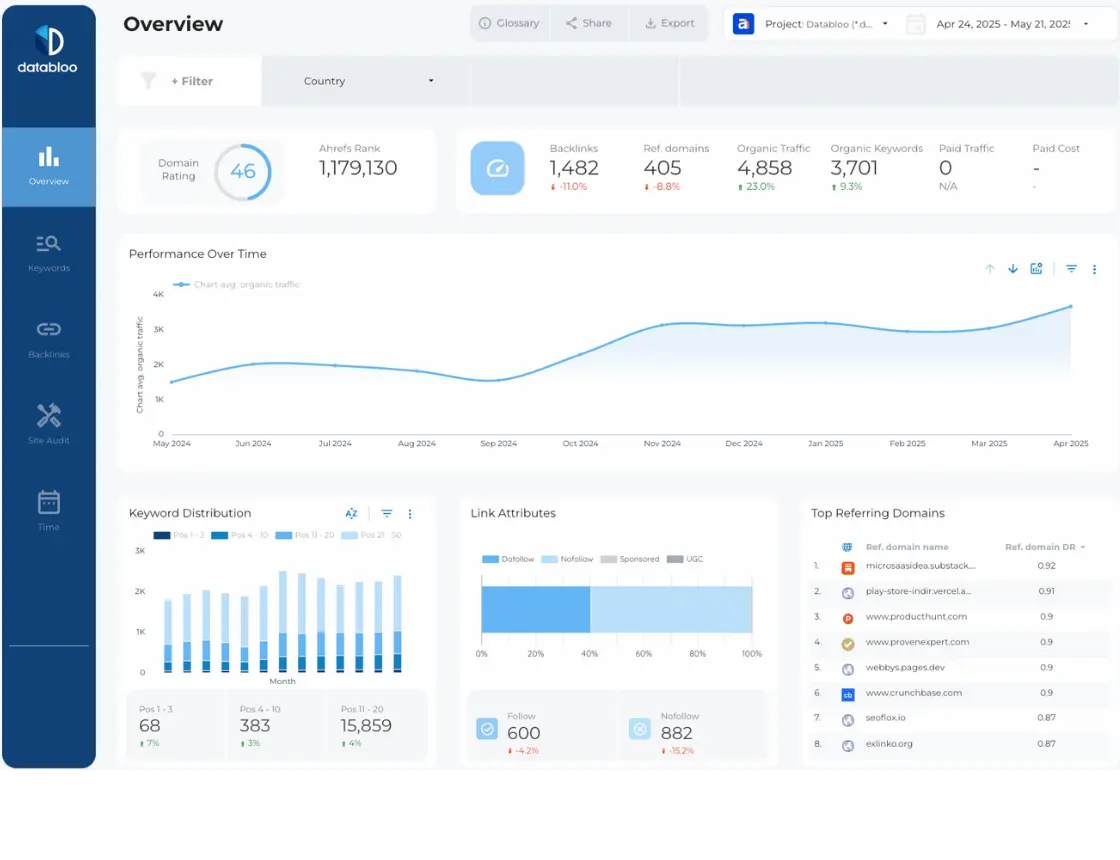
Interactive dashboards make your reports stand out and make data easier to use. Clients can look at the numbers on their own, choose different dates, and see more details, which helps them trust and use the information more.
Product Recommendation:
- Use Looker Studio (formerly Google Data Studio) to build dashboards that pull data from sources like GA4, GSC, Ahrefs, and SEMrush.
Stand out by offering interactive dashboards. This makes it easy for clients to view the data their own way and shows you are a helpful partner.
Best Practices for Visualizing Link Building Data
To maximize clarity and credibility in your visuals:
- Highlight Key Takeaways: Use notes, different colors, or boxes to point out important ideas, not just the numbers.
- Maintain Consistent Branding: Incorporate logos, fonts, and colors for a polished, professional look.
- Scale Responsibly: Ensure the numbers and lines on your charts are accurate so you do not mislead viewers.
- Label Everything Clearly: Add dates, units, what each number means, and the source of the data, so people do not get confused.
When you show link-building data in a clear way, it does more than just prove your results. It helps tell a story that builds understanding, trust, and action.
Interpreting Results & Drawing Actionable Insights
The real value of reporting is not just in the numbers, but in what those numbers tell us. Data without explanation is just background noise. Your job as an SEO professional is to turn raw numbers into useful ideas, clear direction, and smart business choices. This is where your skills show and where you either earn or lose your client’s trust.
Moving Beyond Surface-Level Data
Great reports do more than just show numbers. They explain what those numbers mean.
💡Expert Tip: Explain why each result matters. When sharing results, clarify what changed, why, and what it means for the client. Suggest next steps.
Clients often struggle to tell the difference between links that really help and numbers that just look good on paper. Your explanation helps clarify the value.
Think about adding a section on the difference between things that happen together and things that actually cause each other. Show how you carefully link better backlinks to higher rankings or more traffic, without claiming you are completely sure. This helps build trust and demonstrates your ability to analyze results.
Identifying Trends & Anomalies
The most useful information is often found in the patterns and the unusual changes:
- Look for consistent upward trends, such as steady increases in referring domains, rising organic traffic, or improved keyword rankings.
- Look into anything unusual, such as sudden drops in rankings or a significant loss of backlinks. These odd changes can reveal problems, new chances, or effects from search engine updates.
💡Expert Tip: Whether things get better or stay the same, point it out. Explain what happened, what you learned, and how you will use that knowledge to plan your next steps. This shows you are taking charge and always looking to improve.
Translating Data into Strategic Recommendations
Numbers are helpful, but actions are what matter most. Always link your numbers to real decisions:
If X happened → then Y is the implication → therefore Z becomes the next strategic step.
Example:
“A significant number of new links were earned from niche forums (X), indicating strong audience engagement in community-based environments (Y). Therefore, we’ll expand outreach to similar industry forums and topical discussion platforms next quarter (Z).”
Every idea you share should directly tie to what the client wants to achieve, such as generating more leads, building their reputation, making more sales, or becoming a leader in their field.
Case Study Integration (Thematic)
To reinforce credibility, integrate case study material or anonymized report excerpts whenever possible:
Including real examples of link-building results, even if you hide some details, shows your real experience. Show how you explained things like higher domain ratings, better rankings, or more sales to clients, and how those lessons helped plan future work. This creates a feedback loop of transparency, proof, and planning, turning each report into something that builds trust over time.
In the end, reporting is not just about showing what happened. It is about making clear why it matters and what to do next. Useful advice connects your link building work to real business growth.
Beyond the Numbers: Mastering Communication & Proving Real Value
Mastering Client Communication: Presenting Your Report
Even the best report can be overlooked if it is not shared clearly. The way you share your findings affects how clients see you, trust you, and stay with you over time. Good communication turns reporting into a helpful discussion, moving the talk from “Here’s what we did” to “Here’s what this means for your business.”
Changing the Presentation to Your Audience
Everyone sees link building differently. To make things clear and build trust, adjust the level of detail and the words you use based on who will read the report.
💡Expert Tip: Don’t deliver a one-size-fits-all report. Match the focus and narrative to the role:
C-Suite / Executives
- Prioritize: Executive summary, ROI, business impact, financial outcomes.
- Approach: Use fewer small details, with more strategic meaning.
Marketing Managers
- Prioritize: Campaign performance, channel integration, content insights, tactical decisions.
- Approach: Show how link building connects with the rest of your marketing.
SEO Specialists / Analysts
- Prioritize: Technical performance, metrics, methodology, link-quality analysis, and data exports.
- Approach: Provide depth and precision.
By changing your message for each group, you ensure everyone sees what matters most without making things too complicated.
Strategies for Effective Presentation
How you present results can be just as important as the results themselves.
- Tell a Story:
Share results as a story: explain the background, goals, what you did, what happened, and what comes next. People remember stories, not spreadsheets. - Focus on Benefits, Not Features:
Instead of just listing numbers, explain why they matter for the business:- Instead of: “We built 20 links.”
- Say: “Those 20 links helped drive a 15% increase in organic traffic to your priority landing pages.”
- Be Proactive with Questions:
Think about the questions clients might have and answer them before they ask, such as changes in rankings, what competitors are doing, or how long results will take.
💡Expert Tip: Be ready with data-supported answers for common questions. Being confident when you talk builds trust and shows you are a helpful partner.
Think about making tools like slide templates, meeting plans, and key talking points to create easy-to-use ways of sharing information that make reporting better for clients.
Handling Questions & Objections Gracefully
Client concerns will always come up, but they are a chance to show you are working together, not something you need to fight against.
Best practices:
- Listen Actively: Understand the intent behind the question before responding.
- Refer Back to Data & Goals: Base your answers on facts and the goals you agreed on earlier.
- Acknowledge Limitations: If something did not work as planned, be honest and then explain what you will do next.
- Reinforce the Long-Term Nature of Link Building: Remind clients that link strength builds slowly and results improve over time.
🎯Many clients do not understand the value and timing of link building. Clear and confident communication, backed by data and stories, makes things smoother, builds trust, and helps keep clients.
When you share your report well, it becomes more than just an update. It starts a real conversation about strategy. Good data, clear ideas, and confident speaking show you are not just a service provider, but a partner who cares about helping the business grow.
Common Link Building Reporting Myths
Clients and stakeholders often enter reporting conversations with ideas rooted in old SEO habits or simple measurements. Talking about these misunderstandings directly not only teaches clients but also builds trust, shows your knowledge, and helps everyone agree on what real success means.
💡Use this section to clearly correct misunderstandings and show your knowledge based on real results, data from tools, and what works best in the industry.
What Clients Really Need to See and What to Ignore
Below are five prevalent myths, paired with clear explanations and guidance to help reset expectations:
Myth #1: “More Links = Better Rankings”
Reality:
Just having more links does not lead to better results. One good link from a trusted, related website can be worth more than many low-quality links.
How to Address:
- Teach clients what makes a link valuable, such as the site’s trust level, how closely the topic matches, and where the link appears.
- Show how a few strong links can help more than having lots of weak ones.
- Reinforce alignment with Google’s quality and spam guidelines.
Myth #2: “Link Building is a Quick Fix”
Reality:
Link building works over time. Results usually show up after months, not weeks. Big changes in rankings almost never happen right away, and if they do, they often do not last.
How to Address:
- Set expectations early: link building is cumulative.
- Show performance trends over time to highlight steady, sustainable growth.
- Explain that it takes time to do research, contact websites, and get approval.
Myth #3: “All Links Are Equal”
Reality:
The value of a link depends heavily on how trusted the site is, how closely the topic matches, where the link is placed, how healthy the site is, and what type of link it is (e.g., dofollow, nofollow, user-generated, or sponsored).
How to Address:
- Explain what makes a link valuable, such as if it is included naturally in an article, comes from a trusted site, or matches the industry.
- Contrast examples like editorial placements vs. directory listings.
- Explain why bad links can have no effect or even hurt your site.
Myth #4: “We Should Only Report on the Number of Links”
Reality:
Just counting links is not useful without more information. What really matters is what happens as a result, like better rankings, more visitors, more sales, and a stronger brand.
How to Address:
- Connect link-building work to results like more visitors, better rankings, and more sales.
- Show how things like how closely the topic matches and how trusted the site is can lead to real results.
- Teach clients why the details of each link matter more than just the number of links.
Myth #5: “Link Building is Dead or Irrelevant”
Reality:
Even though some people say otherwise, Google still sees backlinks as very important for rankings. Link building is not gone; it has just changed. Now, good link building depends on real connections, useful content, and links that fit naturally in articles.
How to Address:
- Reference Google’s statements reinforcing the continued importance of links.
- Use competitive SERP examples to show how top sites benefit from strong backlink profiles.
- Show how today’s link building matches up with focusing on quality in SEO.
By openly discussing these myths, you clarify things, build trust, and help clients understand what real link-building success looks like based on facts. Being open not only improves client relationships but also makes people more confident in your strategy and reports.
Case Study: From Data to Decision “A Successful Link Building Report in Action”
A strong link-building report does more than just present results. It clarifies strategy, drives planning, and accelerates business growth. The example below demonstrates how good reporting empowered a SaaS client to make data-driven decisions.
Client Background
A B2B SaaS company struggled to attract attention to its main product features, despite robust website content. Its online growth stalled, and leaders hesitated to allocate funds.
Core Challenges
- Low domain authority relative to competitors
- Minimal referral traffic to key landing pages
- Stagnant keyword rankings for high-intent product terms
Link Building Strategy
The campaign centered on editorial link acquisition from:
- Industry-specific SaaS publications
- High-quality tech blogs
- Trusted software review platforms
This approach targeted links from trusted, relevant sources that could drive visitors, instead of just getting as many links as possible.
Reporting in Action
Executive Summary Highlights
The report started with clear results, making things simple for everyone involved and showing how it helped the business:
- +25% increase in referring domains
- +10% increase in organic traffic to target landing pages
Visual Storytelling
Charts and graphs made the results easy to understand right away:
- A line graph showing steady DR growth over six months
- A bar chart comparing the average DR of newly acquired links to competitor benchmarks
- A traffic trend chart illustrating the lift in organic sessions
Key Metrics Tracked
The report focused on important numbers that showed quality and results, such as:
- Number of new referring domains
- Average DR of newly acquired links
- Target keyword ranking movement
- Referral traffic insights
- New demo sign-ups influenced by organic and referral channels
🎯Insights: The report identified a notable trend: Links from well-known software review sites generated more demo requests. This insight shifted focus from simply monitoring results to understanding what made things work.
Strategic Recommendations
Based on the findings, the report recommended:
- Expanding outreach to software review platforms
- Creating custom materials to help get more articles published
- Paying more attention to product pages that help turn visitors into customers
Business Outcome
Within three months of applying those recommendations, the client saw:
- 15% increase in qualified demo sign-ups from organic and referral channels
- Stronger confidence in link-building ROI
- A much bigger budget to reach out to more sites and get more links
The report did more than just share results. It led to action, got everyone on board, and helped the company grow faster.
🎯In a real client case, include parts of the report with private details removed, like ranking charts, traffic graphs, or screenshots showing where links were placed. This proof builds trust, supports decisions, and shows real skill in link-building reporting.
This example demonstrates that a well-organized link-building report can drive real business growth, not just summarize results.
Future-Proofing Your Reporting & Unlocking Advanced Strategies
Adapting to Algorithm Changes & AI in SEO Reporting
SEO keeps changing quickly. With major Google updates and new AI tools, link-building reports need to remain flexible, data-driven, and focused on long-term goals. To stay ahead, you need to know why results change and update your reports to match what’s happening now.
Impact of Google Algorithm Updates (e.g., Helpful Content System)
Google’s updates, especially those focused on the Helpful Content System, have made SEO about more than just technical details. Now, how relevant, trustworthy, and easy to use your content is matters just as much for success.
These shifts elevate new reporting priorities:
- Highlighting metrics tied to content quality and engagement, not just backlinks or rankings.
- Measuring user behavior from referral traffic (bounce rate, time on page, conversions)
- Demonstrating how link placements connect audiences to valuable, intent-aligned content
Advanced Impact Metrics
Consider incorporating alternative performance indicators that reflect modern ranking dynamics, such as:
- Brand mentions and sentiment signals.
- Referral traffic quality metrics
- How strong links relate to how quickly sales happen
- Changes in search results features or how visible your site is
These context-rich insights help clients understand impact beyond traditional traffic and ranking numbers.
The Role of AI in SEO Analysis & Reporting
AI is changing how SEO experts gather, understand, and share data. Used well, AI can produce reports faster and more thoroughly without sacrificing accuracy or honesty.
AI-Assisted Reporting & Analysis:
Highlight how AI can support your process by:
- Bringing together data from different places automatically
- Detecting anomalies or performance shifts faster than manual monitoring
- Identifying meaningful patterns across rankings, traffic, and link profiles
- Creating first drafts of insights, summaries, or quick overviews
However, AI should enhance expertise, not replace it.
💡Important Consideration: Always verify AI-generated recommendations or insights against human judgment, trusted tools, and real client context before presenting them.
Future-Proofing Your Reporting Strategy
Algorithm changes and AI innovation will never slow down, but the fundamentals of success remain consistent. To stay ahead:
- Stay Flexible: The way you report should change as the things that affect rankings and how you measure results change.
- Prioritize What Clients Value: Focus on business impact, audience relevance, and content usefulness, not minor fluctuations.
- Invest in Strong Tools: Choose platforms that bring data together effectively, provide automated insights, and offer robust ways to analyze results.
- Lean Into E-E-A-T: Expertise, experience, authority, and trust will continue to shape ranking potential and client perception.
By embedding adaptability into your reporting process, you demonstrate true strategic leadership. Your reports will not only reflect current performance, but they’ll help clients navigate the future with confidence.
Essential Resources for Reporting Excellence
Link Building Reporting Checklist for Success
Use this checklist to make every report clear, accurate, and client-focused.
Before You Start
Data Collection & Review
Report Creation
💡Tip: Add templates, downloads, or easy-to-use guides to help clients understand
Visualization & Presentation
Post-Presentation Follow-Up
This checklist ensures your link-building reports are clear, convincing, and ready for clients.
Interactive Report Template & Client Communication Script Pack
Make your link-building reports better by giving clients tools that make data easy to understand and help you have useful conversations. Using an interactive template and ready-made scripts makes reporting more organized and professional.
Interactive Looker Studio (or Similar) Template
Give clients a dashboard they can adjust to see how link-building is working. This template lets teams review results on their own, ask better questions, and quickly see how their work is making a difference.
Template Features:
- Fully customizable Looker Studio layout
- Integrated connectors for:
- Google Search Console
- Google Analytics 4
- Upload CSV files from Ahrefs or SEMrush.
- Key link building charts and important numbers, such as:
- Referring domains
- Spread of domain ratings or authority scores
- Changes in search rankings
- Effect on website visits and sales
- Easy-to-use filters for dates, landing pages, link types, and authority scores
- Options to look closer at the details
This dashboard not only makes reports clearer, but it also shows you are open and focused on data.
Client Communication Script Pack
Better communication helps everyone stay on the same page, builds trust, and keeps clients longer. This script pack helps you or your team answer common questions and lead conversations clearly and confidently.
Scripts for Common Questions:
- “Why are these links taking so long to show results?”
- “Why can’t we just buy links for faster results?”
- “What’s the difference between referring domains and total backlinks?”
- “How does link building impact our sales pipeline?”
Each script should provide short, reassuring answers grounded in data, proven methods, and long-term planning.
Phrases for Managing Expectations:
- “Link building is a long-term investment, and we’re seeing solid foundational growth here…”
- “While direct attribution to immediate sales can be complex, we can see how traffic and rankings from these links are feeding your lead generation funnel…”
- “Our focus is on quality and relevance over volume. These placements are designed to compound in value over time…”
Templates for Follow-Up Emails:
- Post-report meeting summaries
- Clarifications on specific data points
- Ranking/traffic interpretation explanations
- Next-step action confirmations
These communication tools help you look professional and make reporting easier, especially for clients who are new to SEO or unsure about how long link building takes.
By using a flexible reporting template and clear communication tools, you help clients understand results better and make it easier for you to explain them. This not only makes reports clearer, but also builds trust, shows your value, and helps your service stand out from others.
Conclusion
Strong link-building reporting is essential. It shows results, builds trust, and grows your business in today’s competitive SEO world. When reports do more than list numbers and tell a clear story, they become an advantage, not just another task.
By using this guide, choosing the right metrics, presenting clear results, understanding data, and sharing insights, you can simply show not just what you did, but why it matters for your client’s business.
🎯The outcome?
Stronger relationships, sharper decisions, and reports that continually highlight your value as a long-term partner.