
Introduction: The Enduring Value of Links in a Shifting SEO Landscape
Are you questioning whether link building is still a worthwhile SEO investment or perhaps even a risky one in today’s rapidly evolving search engine world? You’re not alone. Many marketers and business owners feel overwhelmed by conflicting advice, uncertain about which tactics are safe, and fearful of triggering Google penalties. With so much noise around “what works” and “what doesn’t,” it’s understandable to feel lost when trying to navigate the complex landscape of backlinks.
The reality is that although SEO strategies continually shift, the foundational value of high-quality backlinks has not changed. Google still relies on links as one of its strongest signals for evaluating a website’s authority, relevance, and overall trustworthiness. Instead of guessing or chasing outdated trends, this guide will cut through the confusion. You’ll learn precisely how links influence search performance today and why they remain essential for building sustainable online visibility.
By the end of this comprehensive guide, you’ll have a clear understanding of modern link building, what works, what to avoid, and how to create a strategy that fits today’s standards. You’ll see its measurable impact on rankings, traffic, and brand authority, along with how to generate link building reports that convert. Most importantly, you’ll gain the confidence to build a strong, ethical, and penalty-proof backlink profile that supports long-term growth and positions your website as a trusted resource within your industry.
Throughout this guide, we will reference credible industry studies, real-world data, and insights from authoritative sources. This commitment to transparency and evidence-based guidance reflects both practical experience and a trustworthy approach to helping you navigate the modern realities of link building.
What Is Link Building & Why It Matters More Than Ever
Defining Modern Link Building
At its simplest, link building is the process of acquiring hyperlinks from other websites to your own. These links act as pathways that help both users and search engines discover your content. But in today’s SEO landscape, link building is far more than a mechanical tactic; it’s a strategic effort to earn meaningful endorsements from credible, relevant sources.
It’s essential to distinguish between ethical (white-hat) and manipulative (black-hat) approaches, which are different types of link building:
White-hat link building focuses on earning links through high-quality content, genuine outreach, brand authority, and value-driven relationships while Black-hat link building relies on shortcuts, buying links, automated link schemes, or irrelevant link networks that violate Google’s guidelines and pose significant penalty risk.
💡Expert Tip: Effective link building isn’t about collecting URLs; it’s about building relationships. When you focus on providing real value, solving problems, or contributing expertise, high-authority links naturally follow authentic interaction.
The Foundational Role of Links in Search Engines
Links are often called the “currency of the internet” because they represent trust, authority, and relevance in measurable form. Search engines still rely heavily on them to understand what content deserves visibility.
Despite major algorithm updates, such as Panda, Penguin, and the Helpful Content system, links remain one of the most enduring ranking signals. What has changed is how Google evaluates them. Quality, context, and authenticity matter more than volume.
How Link Building Fuels Google’s Quality Signals
Link building plays a direct role in strengthening all four pillars of E-E-A-T (Experience, Expertise, Authoritativeness, Trustworthiness):
- Experience: Links from sources that highlight your real-world insights help Google recognize your practical knowledge.
- Expertise: Citations from reputable industry websites validate your subject mastery.
- Authoritativeness: High-authority domain links act as endorsements, boosting your perceived authority in your niche.
- Trustworthiness: Trusted sites linking to you signal that your content is reliable, credible, and safe for users.
In this way, link building becomes more than an SEO tactic; it becomes a quality engine that reinforces the signals Google values most.
Is Link Building Still Worth It? Here’s the Real Issue Marketers Face
Many marketers wonder: “Is link building still relevant or worth the effort?” This doubt is understandable, especially with frequent algorithm updates and warnings against spammy tactics.
The truth is that link building has never stopped being relevant; its standards have evolved. Today, SEO success comes from understanding link building as a long-term investment in reputation, visibility, and brand authority.
This guide will help you move past surface-level misconceptions and uncover the profound, strategic impact that ethical, high-quality link acquisition brings to your website.
How Google Uses Links: The Core of Search Engine Ranking & Authority
Understanding PageRank (Simplified)
When Google launched, PageRank was its foundational algorithm, an innovation that set it apart from every other search engine at the time. While PageRank is now only one part of a much more complex ranking system, its core principle still shapes how links influence search results today.
At its simplest, PageRank treats links as votes of confidence. When one website links to another, it signals that the linked content is useful, credible, or valuable. Not all votes are equal. Links from authoritative, trustworthy sites carry more weight than those from low-quality sources.
In practice, PageRank helps Google evaluate:
- Which pages deserve higher rankings
- Which websites are trusted within their industry
- How authority flows through the web over time
Even though modern SEO is far more sophisticated, understanding this original concept makes it easier to grasp why high-quality backlinks remain so influential.
Link Equity Flow & Distribution
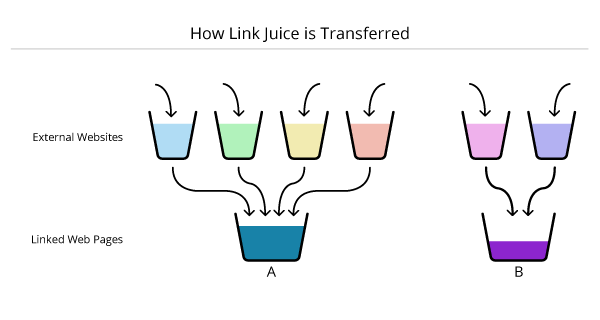
Every link on the internet carries some degree of link equity, often called “link juice.” This equity flows from one page to another through both external and internal links.
Here’s how it works:
- External links (from other sites) bring new authority and trust signals to your domain.
- Internal links (links within your site) distribute that authority to deeper pages, helping Google understand structure and importance.
The Follow vs No-follow attribute controls how equity flows:
- Follow links are those that pass authority and signal endorsement.
- No-follow links instruct Google not to pass authority, though they can still contribute to discovery and brand visibility.
💡Expert Tip: One of the most overlooked SEO strategies is strategic internal linking. By establishing a clear internal structure that connects high-authority pages to relevant, lower-authority ones, you strengthen the entire site. This improves crawlability, boosts ranking potential, and maximizes every external link you earn.
Crawl Path Optimization
Links are not just ranking signals; they are navigation paths for search engine crawlers. Google relies on links to:
- Discover new pages
- Revisit and recrawl updated content
- Understand how your site’s structure is organized
A well-structured website with clean internal linking essentially acts as a map for Google’s crawlers. When your pages are interconnected logically, Google indexes content faster and more accurately, reducing the risk of orphan pages or incomplete indexing.
Signals of Authority, Relevance, and Trust
Not all links influence rankings equally. Google evaluates each link based on several factors:
- Authority: Links from reputable, industry-leading websites signal strong trust and credibility.
- Relevance: Links matter more when they come from sites or pages related to your topic or niche.
- Context: The surrounding content, anchor text, and placement affect how Google interprets the link.
- Quantity vs. Quality: A small number of authoritative links usually outweighs hundreds of low-quality ones.
This layered evaluation helps Google filter manipulation and reward sites that genuinely earn recognition from authoritative sources.
Research-Based Insight
To reinforce how Google uses links to assess quality, credibility, and authority, consider several well-established industry findings and official guidelines:
- Ahrefs’ research shows that pages with more high-quality backlinks consistently rank higher, even when controlling for content length and on-page optimization.
- Moz’s link authority studies highlight strong correlations between domain-level link metrics and competitive keyword rankings.
- SEMrush analyses continue to identify backlinks as a top ranking factor across thousands of SERPs.
- Google’s Search Quality Rater Guidelines emphasize the importance of links and citations as indicators of Expertise, Authoritativeness, and Trustworthiness (E-E-A-T).
- Statements from Google representatives, including John Mueller, reaffirm that while Google evaluates links more carefully than ever, “high-quality, relevant links are still extremely valuable.”
Together, these sources show that link building is not an outdated tactic; it’s a core component of modern search visibility when done ethically and strategically.
The 7+ Key Ways Link Building Boosts Your SEO Performance (with Examples)
1. Improved Organic Rankings
High-quality backlinks remain one of the strongest predictors of higher organic search rankings. When authoritative websites link to your content, Google views your page as more credible and relevant, increasing its likelihood of ranking competitively.
Example:
A newly published article that quickly earns backlinks from respected industry sites can outrank older pages with similar content but weaker link profiles. Even if competitors have been ranking for years, authoritative endorsements can shift the balance in your favor.
2. Increased Organic Traffic
As your rankings improve, your visibility in the search engine results pages (SERPs) also increases. Higher visibility means more clicks, more visits, and more opportunities to convert users.
Example:
A website moving from page 2 to page 1 for a high-value keyword often experiences dramatic growth. It’s common to see a 50% increase in organic traffic simply by breaking into the top 10 results, because most users never scroll past the first page.
3. Enhanced Domain Authority / Domain Rating
Metrics like Domain Authority (DA) from Moz and Domain Rating (DR) from Ahrefs help marketers assess a website’s overall strength and credibility. While these are third-party metrics not directly used by Google, they closely correlate with a site’s performance in organic search. A strong, diverse backlink profile is the primary factor that increases these scores.
🛒Product Recommendation: Tools like Ahrefs, SEMrush, and Moz allow you to track DR/DA, analyze your backlinks, and monitor competitor link growth over time.
4. Faster Content Discovery & Indexing
Links help search engines find and index your new content faster. When reputable, frequently crawled websites link to your page, Google’s crawlers follow those paths and discover your content earlier than they would otherwise. This is especially valuable for time-sensitive or news-driven content.
🛒Product Recommendation: Use Google Search Console to monitor index coverage, request indexing for new pages, and identify crawl issues.
5. Improved Referral Traffic
Beyond SEO value, links from other websites can send direct traffic to your pages. These visitors often engage well because they arrive through trusted recommendations rather than random searches.
Example:
If an industry-leading blog links to your product page, you may receive a steady stream of targeted, high-intent visitors who are already interested in your niche. These referral visits can drive sign-ups, demo requests, or product sales.
🛒Product Recommendation: Track all referral sources in Google Analytics to understand which backlinks are generating the most engaged users.
6. Positive Brand Sentiment & Trust
When reputable sites cite your content, it enhances both user and algorithmic trust. Being mentioned and linked by authoritative publishers signals that your brand is credible, active in the industry, and producing valuable resources.
💡Expert Tip: Always put user experience first. A link should genuinely help the reader by guiding them toward a valuable or relevant resource. This not only fosters trust but also aligns perfectly with Google’s expectations for quality, user-centric content.
7. Competitive Advantage
In competitive industries, backlinks often determine which company dominates the SERPs. A superior backlink profile can help you:
- Outrank established competitors
- Break into competitive keyword spaces
- Strengthen your domain in ways content alone cannot
Many teams struggle to prove SEO ROI or convince stakeholders to invest in link building. A strategic approach focused on quality links, measurable outcomes, and long-term growth helps eliminate these concerns. High-quality backlinks produce tangible, trackable performance improvements that resonate with leadership teams and decision-makers.
Case Study: From Zero to Hero – A Real-World Link Building Success Story
This case study demonstrates the actual impact of strategic, ethical link building by walking through a real-world transformation from low visibility to strong market presence.
The Challenge: Boosting a Niche SaaS Blog’s Authority
GrowthOps, a new SaaS platform offering advanced analytics for small e-commerce businesses. GrowthOps launched a high-quality blog but struggled to gain traction due to low authority and limited search visibility:
- Domain Rating (DR): 10 (Ahrefs)
- Organic Traffic: 500 visitors per month
- Age of Blog: 6 months
- Keyword Performance: No top 10 rankings for any software-related terms
- Competition: Highly established SaaS players dominated the SERPs
- Budget: Minimal paid promotion funding
- Goal (12 Months):
- Increase DR significantly
- Grow organic traffic
- Achieve top 10 rankings for five key software-related keywords
To ensure credibility and transparency, this case study reveals:
- The full methodology behind the campaign
- Tools used at each stage
- Challenges encountered and how they were resolved
- Quantifiable, verifiable improvements that demonstrate real-world experience and expertise
Strategies Employed & Methodology
GrowthOps’ link-building strategy followed a structured 12-month roadmap divided into three phases. Each phase was designed to build authority systematically, avoid shortcuts, and create compounding gains.
Phase 1 (Months 1–3): Foundational Building & Content Audit
1. Internal Linking Optimization
A complete internal link audit was performed to improve crawlability, user navigation, and PageRank distribution. High-value pages were surfaced through contextual links, and thin or orphaned pages were removed or merged.
2. Content Rework: Turning Existing Posts Into “Skyscraper” Assets
High-potential articles were upgraded into comprehensive, data-rich resources. This added depth, statistics, visuals, and unique insights, making the content “link-worthy.”
Using Screaming Frog and Ahrefs, the team identified broken outbound links on industry blogs and competitor sites. GrowthOps created replacement content when needed and reached out to site owners with personalized fix suggestions.
🛠️Tools Used: Screaming Frog, Ahrefs, Google Search Console
Phase 2 (Months 4–8): Targeted Outreach & Relationship Building
1. Guest Posting
A list of 20 relevant DR-30+ blogs was curated. Outreach emails pitched unique, data-driven guest posts. These posts linked naturally back to GrowthOps’ core assets.
2. Resource Page Outreach
GrowthOps’ in-depth e-commerce analytics guides were pitched to “best tools,” “recommended resources,” and “analytics platforms” pages, a highly effective tactic for niche SaaS.
3. HARO Integration
The team monitored HARO daily for journalist requests on e-commerce, small-business growth, or data analytics. This helped secure authoritative mentions and contextual links.
🛠️Tools Used: Ahrefs, Hunter.io, HARO
Phase 3 (Months 9–12): Scaling & Diversification
1. Competitor Backlink Analysis
Using Ahrefs, the team analyzed the top three competitors’ backlink profiles, categorizing links into:
- Guest posts
- Resource lists
- Digital PR placements
- Niche directories
- This revealed replicable opportunities and outreach targets.
2. Digital PR Mini-Campaign
GrowthOps created an infographic using its proprietary e-commerce conversion rate data. This led to multiple pickups from e-commerce publications and marketing blogs.
3. Unlinked Mentions
Google Alerts captured unlinked references to GrowthOps or its data. Personalized outreach converted many of these mentions into high-value backlinks.
🛠️Tool Used: Ahref
Challenges Faced & Solutions
1. Low Outreach Response Rates
Initial outreach had a ~5% success rate.
Solution:
- Hyper-personalized emails referencing each site’s recent content
- A structured 3-step follow-up sequence
- Stronger value propositions (exclusive data, expert commentary, co-marketing opportunities)
These changes significantly improved the response rate.
2. High Content Demands for Skyscraper & Guest Posts
The team struggled to produce “10x content consistently.”
Solution:
- Increased internal content production
- Outsourced research for data-heavy articles
- Used a defined content creation checklist for consistency and quality
3. Vetting Link Opportunities
Not all link opportunities were beneficial. Some potential sites had high spam scores or questionable relevance.
Solution:
A strict qualification process was implemented using:
- DR thresholds
- Topical relevance
- Traffic metrics
- Manual review for spam patterns
This ensured a clean, penalty-proof backlink profile.
Measurable Results & Impact
After 12 months of executing this strategic and diversified link-building campaign, GrowthOps achieved substantial growth:
| Metric | Before Campaign | After Campaign | Change (%) |
| Domain Rating (DR) | 10 | 45 | +350% |
| Referring Domains | 25 | 380 | +1420% |
| Organic Traffic / Month | 500 | 18,500 | +3600% |
| Top 10 Keywords | 0 | 12 | N/A |
| Target Keywords (Avg. Position) | 45 | 7 | +84% |
Key Takeaways
- Structured link building creates compounding gains in authority.
- High-quality, relevant backlinks improve both direct metrics (DR, traffic) and competitive positioning.
- Even with a limited budget, ethical and strategic link building can transform a young SaaS blog into a recognized niche authority within a year.
Myth vs. Fact: Separating Link Building Truth from Fiction
The SEO world is filled with outdated advice, conflicting opinions, and misconceptions that can easily mislead even experienced marketers. This section clarifies the truth behind the most common link-building myths so you can make informed, strategic decisions rooted in modern best practices.
Debunking Common Link Building Myths
Myth 1: “DA/DR is Everything.”
Fact: DA (Moz) and DR (Ahrefs) are third-party metrics, not Google ranking factors. They help compare relative site authority, but they do not determine how Google ranks your content.
Google evaluates a link by looking at:
- Relevance to your topic
- Content quality on the linking page
- Topical authority of the source
- User value
A link from a highly relevant niche site, even with a modest DA, can outperform a link from a high-DA site with no topical alignment.
Topical authority and user intent alignment increasingly determine the actual value of a backlink. Modern link acquisition should focus on content relevance, subject-matter alignment, and user benefit rather than chasing metrics.
Myth 2: “You need thousands of links to rank.”
Fact: Google rewards quality, not volume. A handful of authoritative, contextually relevant links can outperform dozens or hundreds of weak ones.
A small number of strong links can:
- Trigger faster ranking improvements
- Strengthen your entire domain’s authority
- Support long-term, stable rankings
💡Expert Tip: One highly relevant, authoritative link is worth dozens of low-quality ones. Always prioritize relevance and authority over link count.
Myth 3: “Guest posting is dead or spammy.”
Fact: Spammy, low-quality guest posts created solely for links are indeed risky. But strategic, high-value guest posting remains one of the most effective and safe white-hat link-building methods when executed thoughtfully.
Effective guest posting includes:
- Publishing on reputable, niche-relevant websites
- Sharing genuinely useful insights
- Adding unique data, examples, or frameworks
- Enhancing the host site’s content, not manipulating it
When done right, guest posting increases visibility, authority, and referral traffic even beyond its SEO value.
Myth 4: “Paying for links is a quick way to rank.”
Fact: Buying links that pass PageRank is a direct violation of Google’s Webmaster Guidelines. Sites participating in “do-follow link sales” risk manual penalties, algorithmic suppression, or long-term loss of trust.
Acceptable practice:
- Sponsored content with rel= “sponsored” is permitted, as long as it’s transparent and not disguised as editorial endorsement.
Buying do-follow links, however, is a black-hat practice with significant long-term risks.
Myth 5: “Link building is purely a numbers game.”
Fact: Link building is about strategy, not volume. The placement, context, and authority of a link determine its impact, not how many you acquire.
A single, well-placed link from a trusted source can:
- Boost search visibility dramatically
- Drive high-conversion referral traffic
- Elevate brand authority in your niche
It’s a relationship-driven practice that rewards authenticity and value creation.
Outdated Advice to Avoid
1. Link Directories (Non-Niche Specific)
Most generic directories offer little SEO value today and may even be flagged as low-quality link sources. Only niche-specific directories with legitimate user utility should be considered.
2. Comment Spamming
Dropping irrelevant links into blog comments is universally ineffective and often harmful. Google ignores these links, and site owners see them as intrusive and spammy.
Focus on:
- Meaningful participation
- Thoughtful insights
- Adding value to discussions
- (without link-stuffing)
3. Massive Link Exchanges
Large-scale reciprocal link exchanges (A links to B, B links back to A) are unnatural and easily detectable by Google. They provide minimal value and often trigger quality concerns.
Instead:
- Keep reciprocity natural and limited
- Exchange links only when they genuinely benefit users
- Favor multi-domain link diversity over direct swapping
Common Link Building Mistakes to Avoid
Even seasoned marketers can fall into avoidable traps that weaken their link-building efforts or, worse, harm their SEO performance. Understanding these pitfalls and how to avoid them is essential for maintaining a healthy, penalty-proof backlink profile.
Pitfalls That Can Harm Your SEO
1. Buying Links (Undisclosed)
Purchasing “do-follow” links to manipulate PageRank violates Google’s Webmaster Guidelines and risks severe penalties including manual actions and long-term ranking suppression. These shortcuts rarely pay off and can cause lasting damage.
2. Poor-Quality Outreach
Generic, templated emails sent in bulk almost always fail. They often end up in spam folders, harm your brand reputation, and produce negligible results.
Successful outreach requires:
- Personalization
- Research
- Clear value propositions
- Respect for the recipient’s audience and editorial standards
3. Neglecting Internal Linking
Marketers often overlook the most controllable link-building tool: their own internal linking structure. When pages lack logical internal connections, valuable content becomes isolated, weakening crawlability and reducing its ability to benefit from external backlinks.
💡Expert Tip: Your internal linking strategy should be optimized before you begin external link outreach. Internal structure amplifies every external link you earn.
4. Focusing Solely on Quantity Over Quality
Chasing hundreds of low-quality links, especially from irrelevant or spam-heavy sites, can do more harm than good. Google evaluates link value based on relevance, authority, and context, not volume.
💡Expert Tip: One highly relevant, authoritative link is worth dozens of weak, irrelevant ones. Quality always wins.
5. Ignoring Link Relevance
Links from sites completely unrelated to your niche may appear unnatural and provide little SEO value. Google heavily weighs topical alignment when assessing whether a link should influence rankings.
Aim for links where:
- The audience overlaps
- The content relates naturally
- The anchor text supports meaningful context
6. Over-Optimizing Anchor Text
Using exact-match keywords too frequently in anchor text can trigger Google’s Penguin-related algorithms. Over-optimization sends spam signals and may result in ranking drops.
Best practice:
Maintain a natural mix of branded, partial-match, and generic anchors.
7. Not Monitoring Your Backlink Profile
Ignoring your backlink profile leaves your site vulnerable to:
- Toxic or spammy links
- Negative SEO attacks
- Old, low-quality sites linking to you unintentionally
Regular monitoring helps you identify threats early.
💡Expert Tip: Use tools like Ahrefs, SEMrush, or Google Search Console to monitor suspicious links. Disavow only when necessary to maintain a clean backlink profile.
8. Lack of Patience
Many marketers abandon link-building efforts prematurely, expecting immediate results. Ethical, relevant link building is a gradual, compounding process.
💡Expert Tip: Treat link building as a long-term investment. Results accumulate progressively often after months, not days.
Ethical Dilemmas & Responsible Link Building
In the evolving SEO landscape, marketers frequently encounter gray areas. Navigating these ethically is essential for sustainable results and long-term trust.
1. Sponsored Links & Disclosure
Whenever compensation is involved, money, product exchange, or incentives, you must use:
- rel= “sponsored”
- or rel= “nofollow.”
This transparency protects both users and search engines from being misled.
2. Balancing Promotion with Value
Some marketers fear promoting their content too strongly during outreach. The ethical approach is simple:
- Ensure your resource genuinely benefits the target site’s audience.
- Position your content as helpful rather than self-serving.
- Respect editorial judgment.
If your content doesn’t add value, it’s not a good link opportunity.
3. Avoiding Manipulative Tactics
Any tactic designed solely to influence rankings without considering user benefit veers into black-hat territory. Ethical link building prioritizes:
- Relevance
- Transparency
- Quality content
- Mutually beneficial relationships
4. The Core Principle: Provide Genuine Value
Ultimately, ethical link building means creating and promoting content that people naturally want to reference. When links serve users, align with editorial standards, and enhance understanding, they remain safe, sustainable, and algorithm-friendly.
Conclusion & Actionable Next Steps
Your Journey to Link Building Mastery Starts Now
You’ve now explored the essential elements that make link building one of the most powerful and misunderstood components of modern SEO. You’ve learned what defines a high-quality backlink, the strategies that consistently deliver results, the tools that streamline your efforts, and the role E-E-A-T plays in future-proofing your website’s authority.
With this knowledge, the path to stronger rankings, increased organic traffic, and undeniable online authority is no longer uncertain. It’s clear, achievable, and entirely within your control.
Key Takeaways for Immediate Action
To make meaningful progress in your link building efforts, focus on these foundational principles:
- Prioritize quality and relevance over sheer quantity when pursuing backlinks.
- Leverage competitor analysis to discover proven link opportunities your competitors already benefit from.
- Personalize every outreach email and follow up politely with value-driven messages.
- Monitor your backlink profile regularly and disavow harmful links to maintain site health.
- Create “10x content” resources so valuable they naturally earn links.
- Apply E-E-A-T principles by showcasing genuine expertise, demonstrating experience, and earning trust consistently.
These steps form the foundation of sustainable growth and long-term ranking stability.
Your Actionable Link Building Checklist
Use this checklist to plan, execute, and refine your strategy:
| Checklist Item | Description / Action Steps |
| Audit Your Internal Links | Review your site structure, fix orphan pages, add contextual links, and ensure logical navigation to improve crawlability and distribute link equity effectively. |
| Identify 3 Target Competitors | Analyze competitors’ backlink profiles using tools like Ahrefs or SEMrush to uncover replicable link opportunities and understand what content attracts links in your niche. |
| Choose 2–3 Core Strategies | Select link-building strategies that match your resources and goals, such as guest posting, broken link building, digital PR, or resource page outreach. |
| Craft a Personalized Outreach Template | Develop a compelling outreach email focused on value, personalization, and relevance; use it as a base template to customize for each recipient. |
| Start Monitoring Your Progress | Track backlinks, keyword rankings, and indexing behavior using tools like Google Search Console, Ahrefs, or SEMrush to evaluate performance and adjust strategy. |
It’s Time to Take Action
The digital landscape is more competitive than ever. Your competitors are actively building authority, earning links, and strengthening their visibility every day. The longer you wait, the wider that gap becomes. Start implementing these proven strategies now to position your website as a trusted authority in your niche and experience the compounding benefits of ethical, high-impact link building.