
Introduction: Your Buyer’s Guide to Ethical Link Building Success
Are you new to SEO, a small business owner, or a marketing manager feeling lost in the confusing world of link building? With so many tips online, constant warnings about Google penalties, and unclear results, it’s easy to feel overwhelmed and make expensive mistakes. Many people trying SEO have trouble telling the difference between good, honest strategies and risky shortcuts that can quietly hurt your rankings, reputation, and long-term growth.
Now imagine confidently picking and using link-building strategies that really work, strategies that boost your rankings, bring in the right visitors, and make your website a trusted leader in your niche, all while following Google’s rules.
This complete guide is meant to be your go-to Buyer’s Guide to Link Building. It will help you understand the basics, explore different methods, and choose the best options based on your business goals, budget, and the level of risk you are comfortable with. We’ll make link building clear, eliminate outdated or risky advice, and share real-life tips so you can build a strong, lasting set of backlinks with confidence.
By the end of this guide, you’ll have clear and practical steps to help you make smart choices, avoid common mistakes, and spend your time and money on link-building strategies that give real, lasting results. You’ll go from feeling confused to taking action with confidence, changing how you handle off-page SEO.
This guide is based on real experience running honest link-building campaigns in many different industries. It uses proven methods that follow Google’s latest rules and real SEO results. The tips come from what works in practice, not just ideas, helping you build links that grow trust, authority, and steady search visibility.
👨🏻About the Author: I’m Zayan Hassan, an Off-Page SEO and Outreach Specialist who focuses on building strong links, updating existing content, writing guest posts, and online public relations. I help brands get noticed, rank higher, and build trust using honest strategies made for long-term success.
Why Link Building Matters in Today’s SEO
Link building is still one of the most important and often confusing parts of modern SEO, alongside improving internal linking strategies. Even though search engines have changed a lot, backlinks remain a key way to demonstrate credibility, relevance, and trust. Knowing why links matter will help you choose better strategies and avoid shortcuts that might hurt your results in the long run.
Understanding Backlinks: The “Votes of Confidence”
A backlink is simply a link from one website to another. In SEO, backlinks act like votes of confidence. When a well-known website links to your content, it tells search engines that your page is useful, trustworthy, and should be shown to users.
Search engines, especially Google, do not treat all links the same. A link from a trusted and related website is much more valuable than many links from low-quality or unrelated sites. This is why link building is more about quality than quantity.
In practical terms, backlinks help search engines:
- Discover new pages
- Understand topical relevance
- Assess the authority of a domain or page.
The Enduring Power of PageRank
Even though Google’s system is much more advanced now, PageRank is still a basic idea for how the value of links is measured and shared.
PageRank evaluates:
- The authority of the linking page
- The number of outbound links on that page
- How link equity flows through the web
Put simply, links from strong, related websites are worth more than those from weak or spammy sites. One good link from a trusted industry website can be better than many low-quality links.
This is why modern link building prioritizes:
- Relevance between the linking site and your content
- Authority of the referring domain
- Editorial placement within meaningful content
Backlinks are very important for showing E-E-A-T, which stands for Experience, Expertise, Authoritativeness, and Trustworthiness. Google uses this to judge the quality of content, especially in tough or sensitive areas.
High-quality backlinks from authoritative sources help Google infer that:
- Your content is created or endorsed by knowledgeable entities.
- Your brand is recognized within its industry.
- Your website is trustworthy and credible.
Having a diverse mix of backlinks helps your site rank higher in search results because it aligns with what Google expects from trusted websites. This is why getting links the right and honest way is not just a choice, it is necessary.
Studies from top SEO companies consistently show that high-quality backlinks are closely associated with higher rankings. This proves that links remain a key factor when earned the right way.
Beyond Rankings: Referral Traffic & Brand Authority
While rankings often get the most attention, backlinks are valuable for more than just SEO numbers, especially when analyzed in link-building reports that convert.
Referral Traffic:
Links from related, popular websites can send interested visitors straight to your site. These people are already interested in what you offer and are more likely to take action than random visitors from other sources.
Brand Authority & Visibility:
Being featured on respected websites in your niche helps people recognize and trust your brand. Over time, this makes your business seen as a trusted source, which makes future marketing, like sharing content or online PR, work better.
In other words, the right backlinks don’t just improve where you rank; they strengthen how your brand is perceived.
🔑Key Takeaway: Link building is important today not because it fools search engines, but because it shows real authority, trust, and relevance. When done honestly and with a plan, backlinks help improve your rankings, drive traffic, and grow your brand, making them one of the best long-term investments in SEO.
Core Principles of Effective & Ethical Link Building
Successful link building is not about looking for easy tricks or taking advantage of gaps in the rules. It is about aligning with how search engines assess trust, relevance, and authority. These basic ideas are the base of every lasting, honest link-building plan and should guide all your choices.
Quality Over Quantity: The Golden Rule
A common mistake in link building is assuming that more links always lead to better rankings. In fact, a few high-quality backlinks can be more effective than hundreds of weak ones.
💡Expert Tip: A few strong, relevant backlinks are much more valuable than many weak ones.
A high-quality backlink typically meets several key criteria:
- Relevance: The linking website and page are closely related to your niche or topic
- Authority: The website is trusted, has a good reputation, and does not have spammy links
- Traffic: The site gets real interested visitors, not just fake numbers
- Editorial Discretion: The link is added naturally in the content, not forced, paid for, or created by a computer
Focusing on quality keeps your site safe from search engine penalties and gives you better, longer-lasting SEO results.
Relevance Is King: Contextual Backlinks
Relevance makes every link more valuable. A backlink from a site in your niche or that matches your topic sends a much stronger message to search engines.
Contextual backlinks:
- Appear naturally within relevant content.
- Help Google understand what your site is about
- Pass on more value than links that are random or not related.
On the other hand, getting backlinks from sites that are not related to your topic, even if they seem important, can hurt your site and look suspicious. Ethical link building means being careful, not just taking any chance.
Naturalness and Diversity: Building a Healthy Profile
Search engines expect backlinks to grow naturally over time, not in repeated or obvious patterns.
💡Expert Tip: Get backlinks from different places. Using only one way to build links can make your site look fake. A good mix of sources is essential.
A natural backlink profile includes:
- Links from different domains and content formats
- A good mix of different types of anchor text, like your brand name, general words, and words that fit the topic
- Links that grow at a steady pace that matches your site’s growth
Using the exact anchor text too often, or getting a lot of backlinks at once, usually looks like cheating. Having different types of links and not overdoing it helps your site stay strong when search engines change their rules.
User Experience (UX) and Linkable Content
The most important part of ethical link building is excellent content. Websites link to helpful resources, not just to content made only to get links.
💡Expert Tip: Focus on making beneficial content that people want to link to. Good resources naturally get backlinks when people share them or mention them in their own writing.
Linkable content often includes:
- In-depth guides and original research
- Helpful facts, research, and real-life examples
- Helpful tools, guides, or expert advice
When your content is invaluable and easy to use, it is easier to get others to link to it, and those links come naturally, not by force.
Ethical Foundation: White-Hat Strategies Only
Honest link building follows Google’s rules and focuses on getting links by being valuable, relevant, and trustworthy.
Looking at experience, expertise, authority, and trust, ethical link building:
- Reinforces authority through credible endorsements
- Builds long-term trust with search engines and users
- Protects your site from penalties and volatility
Honest methods include reaching out to editors, using online public relations, writing helpful guest posts, and earning links by creating high-quality content.
Dishonest tricks, like buying lots of links, using groups of fake sites, or changing anchor text to cheat, might help for a short time, but usually cause problems later.
This guide is based solely on honest methods, ensuring every strategy is long-lasting, follows the rules, and is designed for lasting SEO success.
🔑Key Takeaway: Good link building is based on quality, relevance, natural growth, and doing things the right way. Learn these basics first, and every method you use later will work better, be safer, and help your site grow over time.
Quick Overview of Link Building Types
Before we look at each strategy in detail, it helps to get a quick overview of the different types of link building. The table below is a simple guide that shows which type is best for each situation, how it works, and how much work it usually takes to do it well and honestly.
📝Note: Effort level reflects planning, outreach, and resources needed, not difficulty alone.
| Link Building Type | Primary Benefit | Example Tactic | Effort Level |
| Guest Posting | Access to new audiences, topical authority | Writing a high-value article for a relevant industry blog with a contextual link back to your site | Medium |
| Broken Link Building | High success rate, value-driven outreach | Finding broken outbound links on resource pages and offering your relevant content as a replacement | Medium |
| Resource Page Link Building | Targeted, evergreen backlinks | Getting your in-depth guide or tool listed on a curated industry resource page | Low–Medium |
| Content Marketing | Naturally attracts organic backlinks | Publishing original research, reports, or infographics that others cite as a source | High |
| Skyscraper Technique | Leverages proven link-worthy content | Creating a significantly improved version of a popular article and reaching out to sites linking to the original | High |
| Digital PR | Brand visibility, high-authority links | Securing editorial mentions and backlinks from news sites or major publications | High |
| Directory Submissions | Foundational trust, local SEO support | Listing your business in legitimate niche-specific or local business directories | Low |
| Competitor Link Analysis | Reveals proven link opportunities | Analyzing competitor backlink profiles to identify sites open to linking in your niche | Medium |
| Internal Linking | SEO control, improved user experience | Strategically linking related pages within your site to distribute authority and guide users | Low |
| Unlinked Mentions | Easy link wins, brand reinforcement | Identifying brand mentions without links and requesting proper attribution | Low |
How to Use This Table as a Buyer’s Guide
Not every link-building tactic is right for every website. Use this overview to:
- Match strategy to goal (authority, traffic, local visibility, or scalability)
- Balance effort vs return based on your resources
- Build a diverse, natural backlink profile rather than relying on one tactic.
In the next sections, we will explain these types of link building in detail, including when to use them, how to do them correctly, and what to watch out for, so you can choose the best strategies for your SEO goals.
In-Depth Breakdown of Each Link Building Type
This section takes a practical, Buyer’s Guide–style approach to link building. Instead of blindly promoting tactics, we’ll examine how each method works, when it makes sense to use it, and what to watch out for so you can invest your time and resources wisely.
1) Guest Posting (Guest Blogging)
What It Is & How It Works
Guest posting means writing and publishing an article on another website or blog in your niche, usually adding a helpful link back to your own site. When done right, it is one of the best and most honest ways to get good links from other sites.
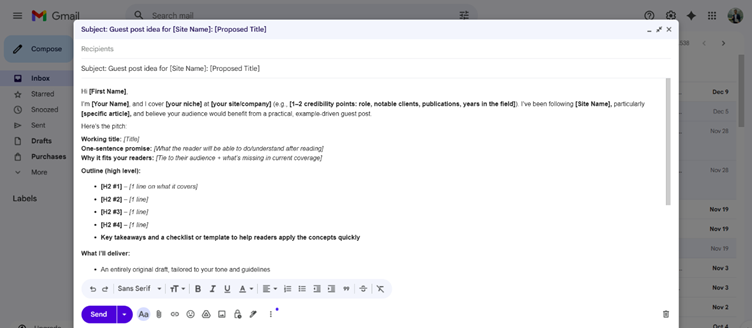
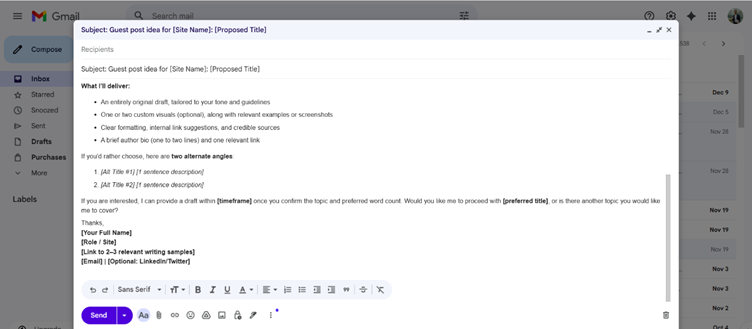
A proven guest posting workflow looks like this:
- Find blogs and websites in your niche using tools like Ahrefs or SEMrush
- Look for topics that those sites have not covered, and check what kind of articles they usually accept
- Suggest useful article ideas that fit their readers
- Write top-notch quality articles that match or go beyond what they expect
- Add a link to your site only where it truly helps the reader
💡Expert Tip: Build relationships, not just links. The most successful guest posting campaigns come from genuine connections, personalized outreach, and a clear focus on mutual value.
Pros & Cons
Pros
- Access to new, highly relevant audiences
- Helps your brand look more trustworthy and knowledgeable
- Gets you good links from inside articles on other sites
- Can drive consistent referral traffic
Cons
- Takes a lot of time (finding sites, suggesting ideas, writing, and following up)
- Requires strong content and writing skills
- The best chances can be hard to get, and there are not many of them
Buyer’s Guide Insight: Is Guest Posting Right for You?
Guest posting is an excellent investment if your goal is to:
- Establish authority in a competitive niche
- Drive referral traffic alongside SEO benefits
- Make your brand stand out by sharing your ideas and knowledge
It works especially well for businesses that focus on content, software companies, agencies, and personal brands that can regularly share useful ideas.
A common way to succeed is for writers to regularly publish well-researched guest articles on trusted sites in their niche. Over time, these writers not only build strong links but also become better known, attract more visitors, and receive new opportunities such as podcast invites, partnerships, and mentions in articles. This ongoing effect shows both people and search engines that you are experienced, skilled, and trustworthy.
Potential Downsides & How to Mitigate Them
Potential Risks
- Publishing on low-quality or irrelevant websites
- Using too many keywords in your anchor text
- Writing weak or basic articles just to get links
How to Mitigate Risks
- Check every site to make sure it fits your topic, has good visitors, and publishes honest content
- Use your brand name or natural words in your anchor text instead of only keywords
- Make sure your articles are useful and can be helpful even without the link
🔑Key Takeaway: Guest posting is still one of the best honest ways to build links if you do it with a plan. Use it to build your brand and relationships, not as a quick fix, and you will see long-term results in search rankings, visitors, and trust.
2) Broken Link Building
What It Is & How It Works
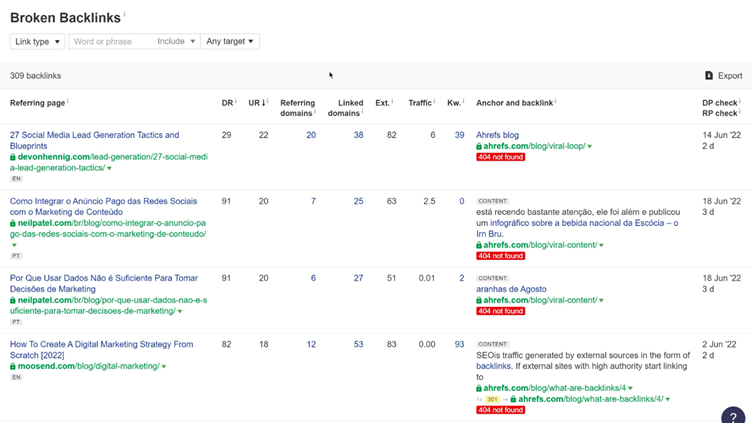
Broken link building is a helpful and honest way to improve websites. It means finding broken links on other sites, creating or repurposing content that covers the same topic as the missing page, and then notifying the site owner and suggesting your content as a replacement.
Since you are helping website owners fix a problem on their site, this method often gets more replies and better results than reaching out to people you do not know.
A practical broken link building process includes:
- Find websites in your niche using tools like Ahrefs, SEMrush, Moz Link Explorer, or browser add-ons that look for broken links.
- Look for broken links on resource pages, blog posts, or educational articles.
- Check the original page to see what the broken link was supposed to offer.
- Create or pick a better page on your site that meets the same need.
- Contact the website owner with a short, helpful email that explains the problem and suggests your page as a fix.
Pros & Cons
Pros
- High success rate because you’re offering a solution
- Adds immediate value to the website owner
- Can be done on a larger scale with the right tools and steps
- Fully aligned with white-hat SEO principles.
Cons
- Takes a lot of time to find good chances
- Often means you need to create new pages or update old ones.
- Outreach still demands personalization. You still need to make your messages personal to get the best results. Link Building Right for You?
Broken link building works well in almost any niche, from software and online stores to education and publishing. It is beneficial if you:
- Already have a strong content library.
- Can create resources that are based on facts or stay useful for a long time
- Want a low-risk, guideline-compliant link-building strategy.
For many businesses, this method gives one of the best returns for the effort if done right.
A typical real-world example is when SEO experts get strong links by finding broken pages on trusted educational or industry sites. By replacing old or broken links with well-written, fact-based articles, they not only gain valuable links but also demonstrate their knowledge and trustworthiness, which helps with E-E-A-T.
Potential Downsides & How to Mitigate Them
Potential Risks:
- Suggesting content that doesn’t match the original intent
- Using overly aggressive or templated outreach emails
- Offering low-quality or thin replacement content
How to Mitigate Risks:
- Ensure your content is a genuine upgrade over the original resource.
- Keep outreach helpful, polite, and concise.
- Focus on making your page closely related and detailed, instead of just working quickly or on a large number of sites.
🔑Key Takeaway: Broken link building works because it helps both sides. When your replacement page is invaluable, website owners are much more likely to link to it, making this method both effective and a good choice for long-term SEO growth.
3) Content Marketing (for Link Acquisition)
What It Is & How It Works
Content marketing for link building is about making great, trustworthy, and easy-to-share content that gets other websites to link to you on their own. Instead of asking for links, you share resources so valuable that other sites want to mention them.
Common linkable assets include:
- Original research and industry studies
- Comprehensive, evergreen guides
- Data visualizations and infographics
- Interactive tools, calculators, or templates
A proven workflow looks like this:
- Identify content gaps or unique angles in your niche using tools like BuzzSumo, Ahrefs, or SEMrush.
- Make content that stands out and is worth linking to by being detailed, original, or including information others do not have
- Share your content in innovative ways using social media, email newsletters, online groups, and by reaching out to the right people.
- Please keep track of when your brand is mentioned and when you get new links to see how well your content is doing and find more chances to share it.
💡Expert Tip: Focus on creating truly valuable, linkable content. When content solves real problems or introduces original insights, backlinks follow naturally through citations and sharing.
Pros & Cons
Pros
- The most reliable and long-lasting way to build links
- Strongly aligned with Google’s quality guidelines.
- Helps your brand become trusted and known for its knowledge over time
- Brings in visitors naturally, not just from search engines
Cons
- Takes a lot of time, skill, and effort
- You may see results more slowly than if you ask for links directly.
- How well this works depends a lot on how good your content is and how well you share it.
Buyer’s Guide Insight: Is Content Marketing Right for You?
Content marketing is the base of any long-term plan to show up in search results. It works best for brands that:
- Aim to establish thought leadership.
- Operate in competitive or information-driven niches.
- Want to keep getting more value from one piece of content as time goes on.
While you might not get links right away, this approach builds lasting trust that helps with all your other link-building efforts.
A typical example is when marketing companies or software brands share new research about their industry. When trusted blogs, websites, and experts use this data, it naturally attracts many good links. Even more, it helps the brand become known as a primary source, which makes Google see them as more experienced and trustworthy.
Potential Downsides & How to Mitigate Them
Potential Risks
- Publishing generic or recycled content
- Just posting content and hoping people find it without sharing it.
- Thinking you will get quick results from long, detailed content
How to Mitigate Risks
- Invest in originality, depth, and data where possible.
- Plan distribution and promotion before publishing
- Set realistic timelines and measure long-term impact.
🔑Key Takeaway: Content marketing is the fairest and easiest way to get more links, but only if you focus on quality and sharing your content. If you do it well, it keeps bringing in links, trust, and new visitors on its own.
4) Skyscraper Technique
What It Is & How It Works
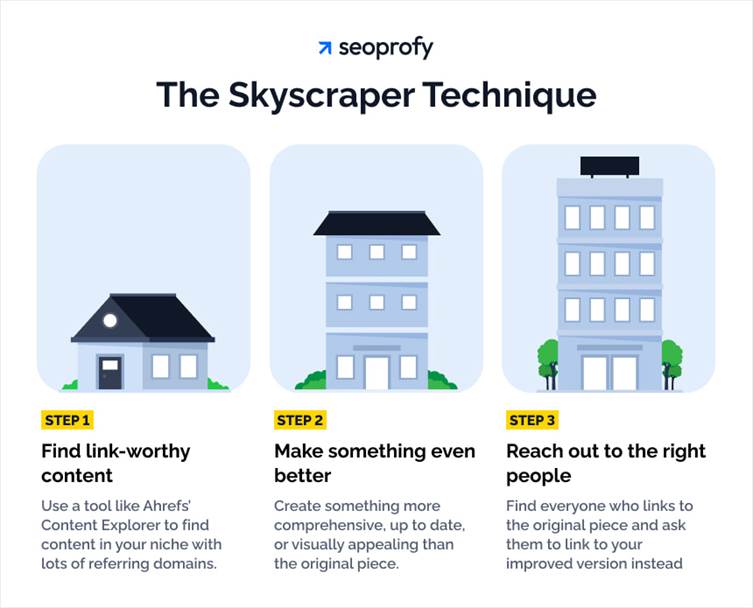
The Skyscraper Technique is a way to get more links to your website by using what already works. Instead of starting from nothing, you find popular content in your niche, make a much better version, and then contact websites that already link to the original, offering them your improved resource.
A structured skyscraper workflow includes:
- Find popular or highly linked content for a keyword that matters to you by using tools like Ahrefs or SEMrush.
- Look at why the content does well and find what it is missing, like old information, missing examples, poor images, or not enough detail.
- Make a much better version with more detail, better images, updated facts, and valuable tips.
- Find websites linking to the original content.
- Reach out with a personalized message that explains why your resource offers more value to their audience.
Pros & Cons
Pros
- Leverages existing link demand and proven topics.
- Can get strong, trustworthy links from other websites.
- Works well once you know how to improve your version.
Cons
- Requires significant effort to truly improve the content.
- Poor outreach can feel aggressive or self-promotional.
- In very competitive niches, there may already be strong content that is hard to beat.
Buyer’s Guide Insight: Is the Skyscraper Technique Right for You?
The Skyscraper Technique is best suited for:
- Competitive niches where authority gaps exist
- Brands that have the time and money to improve their content
- Situations where existing content is outdated or incomplete
If you can’t meaningfully outperform what already exists, this tactic quickly loses effectiveness.
For example, an online store found an old product comparison guide that was still ranking high in its niche. By updating the details, adding honest customer opinions, using better images, and showing current prices, the store made a much better guide. As a result, several popular review and partner sites updated their links to point to the new guide, demonstrating that the store was knowledgeable and trustworthy.
Potential Downsides & How to Mitigate Them
Potential Risks
- Making superficial changes instead of real improvements
- Sending generic, templated outreach emails
- Taking an overly pushy or entitled tone
How to Mitigate Risks
- Focus on substantial upgrades, not cosmetic tweaks.
- Personalize every outreach message with context.
- Position your content as a helpful alternative, not a demand.
🔑Key Takeaway: The Skyscraper Technique works when “better” truly means better. When paired with respectful, personalized outreach, it can be a powerful way to earn authoritative links especially in crowded, competitive markets.
5) Directory Submissions
What It Is & How It Works
Directory submissions involve adding your website or business details to online directories, especially those focused on your industry or area. While this method does not have a significant effect on overall SEO by itself, it is still an essential basic step, especially for local and new businesses.
A responsible directory submission process includes:
- Identifying reputable, relevant directories, such as industry-specific listings or trusted local platforms (e.g., Yelp, Yellow Pages, local chambers of commerce)
- Making sure the directory checks each submission and does not allow spam
- Filling out your business profile correctly, with a clear description, the right category, and current contact details
💡Expert Tip: If your business serves a particular area, do not forget to build local links. Local mentions and directory listings are essential signs of trust for local SEO.

Pros & Cons
Pros
- Supports local SEO and Google Business Profile signals
- Helps establish foundational backlinks and citations
- Relatively easy and low-effort to implement
Cons
- Many directories are low-quality or spam-driven
- General directories that are not focused on your industry have little direct effect on SEO
- Using too many directories can weaken your link profile if you are not careful.
Buyer’s Guide Insight: Is Directory Submission Right for You?
Directory submissions are essential if you are:
- A local business targeting map pack and geo-specific searches
- Starting a new website that needs basic mentions
- Operating in a niche with respected industry directories
The main thing is to be selective. Quality, relevance, and careful review are much more important than the number of listings.
A typical local SEO success story is about a restaurant that ensured its listings were up to date across trusted local food directories and review sites. By keeping its business information up to date and branding consistently across the board, the restaurant showed up more in local search results, attracted more customers, and built more trust with both people and search engines.
Potential Downsides & How to Mitigate Them
Potential Risks
- Submitting to spammy or auto-approval directories
- Having different business information in other listings (name, address, or phone number mistakes)
- Using keyword-stuffed business descriptions
How to Mitigate Risks
- Only target directories with editorial review and real users
- Maintain strict Name, Address, Phone (NAP) consistency.
- Use clear, accurate, and human-friendly descriptions.
🔑Key Takeaway: Directory submissions will not make your business grow quickly, but they are an essential base for local SEO and building trust. If you choose carefully and fill them out correctly, they help people find you without causing problems or weakening your profile.
6) Competitor Link Analysis
What It Is & How It Works
Competitor link analysis means looking at the websites that already show up high in search results for your keywords and seeing which other sites link to them. Instead of guessing, you check what actually works and find link opportunities you can copy or improve.
A practical competitor link analysis workflow includes:
- Identify your top 3–5 organic search competitors using Google search results, Ahrefs, or SEMrush.
- Analyze their backlink profiles using tools such as Ahrefs, SEMrush, or Moz Link Explorer.
- Look for trends, like the same websites linking to them, types of content, and links from well-known sites.
- Sort and choose the best link chances based on how related, trustworthy, and possible they are for your site
💡Expert Tip: Regularly monitor competitor backlinks. New links acquired by competitors often reveal fresh outreach targets and emerging content trends.
🛠️Tool Recommendation: For a closer look at competitor links, tools like Ahrefs or SEMrush give you the most detailed reports and ways to sort the data.
Pros & Cons
Pros
- Reveals proven, real-world link opportunities.
- Provides strategic direction and competitive context.
- Helps you compare your links to top sites in your niche.
Cons
- You need special SEO tools, which often cost money.
- Identified opportunities still require outreach and content effort.
- Not every link your competitors have will be right for your brand.
Buyer’s Guide Insight: Is Competitor Link Analysis Right for You?
Competitor link analysis is a must-use strategy in tough markets. It works best if you:
- Want a data-driven roadmap instead of guesswork.
- Need to focus your outreach effectively.
- Are you competing against established brands or publishers?
If you use it regularly, it helps you act early rather than respond to others.
For example, an online store found that some special industry forums, partner websites, and blogs were linking to its competitors. By sharing helpful advice and building relationships on those same sites, the store earned high-quality links, which made it more trusted and respected without using risky methods.
Potential Downsides & How to Mitigate Them
Potential Risks
- Blindly chasing every competitor’s backlink.
- Replicating low-quality or black-hat link sources
- Ignoring relevance and context
How to Mitigate Risks
- Check each link to ensure it is good, relevant to your topic, and from a trustworthy site.
- Avoid copying tactics that violate Google’s guidelines.
- Use competitor data as inspiration, not instruction.
🔑Key Takeaway: Competitor link analysis helps you use SEO to your advantage. If you use it carefully, it finds the best chances for links and keeps your link building honest, focused, and set up for long-term success.
Ethical Considerations & Avoiding Penalties
Link building can either make your site stronger or quietly hurt it. Knowing what Google allows is key if you want steady rankings, lasting traffic, and links that keep working even when Google changes its rules. This section is your guide to safe and honest link building.
White-Hat vs. Black-Hat: Understanding the Divide
White-hat link building is about getting links by offering real value, being relevant, and having good content. Google supports these methods because they show real approval from other websites.
From an E-E-A-T perspective, ethical link building:
- Reinforces real expertise and experience
- Shows authority when trusted websites link to you
- Builds trust with both users and search engines
White-hat practices include:
- Editorial guest posts with genuine value
- Digital PR and earned media mentions
- Getting links by creating helpful content
- Reaching out honestly and building genuine relationships
On the other hand, black-hat tactics try to trick the system instead of earning trust.
Common black-hat link-building tactics include:
- Mass link exchanges
- Buying links without saying they are paid or marking them as sponsored
- Using too many keywords in anchor text over and over
- Private Blog Networks (PBNs) are made to give links that boost rankings.
⚠️Warning: Black-hat tactics damage trust. Even if they work for a short time, they leave signs that Google can find, even after the fact.
Google’s Quality Guidelines: Your Compass
Google’s Search Essentials (previously called Webmaster Guidelines) clearly warn against tricks meant to change rankings. These rules are the best place to check before trying any link-building method.
In recent years, Google has placed growing emphasis on:
- The Helpful Content System, which rewards content created for users not algorithms
- E-E-A-T signals, which help show if a site is trustworthy, especially in tough markets
Links are no longer judged on their own. Google looks at:
- The intent behind the link
- The quality of surrounding content
- How trustworthy is the site that gives the link is
If a method is trying to cheat the system, it probably breaks these rules.
Recognizing and Avoiding Link Spam
Not all links are good links. Some can actively harm your site.
Red flags for spammy or low-quality websites include:
- Irrelevant or unrelated content
- Thin pages overloaded with outbound links
- No real audience, traffic, or editorial standards
- Clear signs that links were created by bots or tricks
Links from irrelevant or manipulative sources can:
- Be algorithmically ignored or devalued.
- Trigger manual review if patterns emerge
- Make your site seem less trustworthy.
Avoiding bad links is just as crucial as acquiring good ones.
The Price of Manipulation: Google Penalties
Google deals with tricky link practices in two main ways:
Manual Penalties
- Applied by Google’s webspam team
- Visible in Google Search Console
- It can cause your rankings to drop a lot or your site to be removed from search results.
Algorithmic Devaluations
- Automatically ignore links that seem fake.
- Often harder to detect
- Cause your traffic and rankings to go down slowly.
Common consequences include:
- Sudden loss of keyword rankings
- Significant drops in organic traffic
- It can take a long time to recover, even after you fix the problem.
💡Expert Tip: Audit your backlinks weekly/monthly. Watching them closely helps you find bad links before they do real harm.
Maintaining a Healthy Backlink Profile
Best practices include:
- Reviewing backlinks in Google Search Console
- Using other tools to look more closely at your links
- Identifying patterns of spam, irrelevant links, or unnatural anchors
- Telling Google by submitting a disavow file to ignore certain links when needed
You should use disavowing carefully, but it is a crucial way to protect your site when you cannot control who links to you.
Common Mistakes: Short Scenarios & Lessons
- Scenario: A new site buys bulk links from cheap vendors.
Outcome: Temporary ranking lift followed by a manual penalty and traffic collapse.
Lesson: Shortcuts cost more in the long run. - Scenario: A marketer spams forums with keyword-rich anchor links.
Outcome: Links are ignored or flagged, harming trust signals.
Lesson: Engagement must be genuine and relevant. - Scenario: A business submits to hundreds of irrelevant directories.
Outcome: No ranking improvement and increased spam risk.
Lesson: Quality and relevance always outweigh volume.
How to Stay Safe: Actionable Advice
- Align every link-building tactic with user value first.
- Vet sites for relevance, authority, and editorial integrity
- Avoid scalable tactics that remove human judgment.
- Follow Google’s guidelines even when competitors don’t
🔑Key Takeaway: Ethical link building is not just about staying out of trouble. It helps you build a strong base for SEO. When your links show real trust and relevance, your rankings are much steadier, more reliable, and better positioned for the future.
The Future of Link Building in an Evolving SEO Landscape
Link building is not going away, but it is changing. As Google’s systems get smarter and people expect more, the ways to succeed will feel more personal, thoughtful, and focused on real value than before.
The Continuing Rise of E-E-A-T
Experience, Expertise, Authoritativeness, and Trustworthiness (E-E-A-T) will continue to shape how Google evaluates links and the content they point to.
In practical terms, this means:
- Links earned from credible experts, authentic brands, and trusted publications will carry more weight.
- Generic or anonymous link sources will be increasingly discounted.
- Authority will be judged as a whole, looking at who is linking, why they are linking, and how the link fits into the bigger picture of the content.
In the future, link building will focus on content led by experts, honest recommendations, and relationships based on real value, not just simple trades.
Quality, Relevance, and User Experience Reign Supreme
Google’s systems are getting better at spotting:
- Manipulative link patterns
- Unnatural speed of getting new links
- Anchor text that is too focused on keywords
At the same time, they are getting better at rewarding links that:
- Enhance user understanding
- Provide legitimate citations or references.
- Fit naturally within good content.
The takeaway is simple: if a link doesn’t add value to the user, its SEO value will continue to decline.
AI’s Impact on Link Building
AI is already changing how people build links, but not what really works in the end.
AI tools can assist with:
- Finding and checking possible link partners
- Personalizing outreach messages for many people at once
- Coming up with content ideas and finding what is missing
However, AI also introduces risk when misused:
- Mass-generated outreach emails
- Poor AI-written content made to get links
- Spammy patterns that Google can easily spot
💡Expert Tip: Automate repetitive tasks where it makes sense but always keep human judgment at the center. Personalized, thoughtful communication consistently outperforms automation-only approaches.
People will still need to check the work to keep quality, relevance, and good standards.
Building Relationships, Not Just Links
The future of link building will focus more on working together than just taking what you can.
Successful brands are shifting toward:
- Ongoing relationships with publishers and creators
- Strategic partnerships and co-created content
- Getting links through online public relations
These relationships become more valuable over time, leading to:
- Easier future placements
- Brand mentions without outreach.
- Increased trust and authority across the niche
Links you get through genuine relationships are harder for others to copy and much stronger against changes in Google’s Algorithms.
Staying Ahead: Adaptability Is Key
SEO is constantly changing, and link building changes too.
💡Expert Tip: Stay current with Google’s Search Essentials and quality updates. What’s acceptable today may be penalized tomorrow white-hat fundamentals are your safest long-term strategy.
To stay ahead:
- Regularly review Google’s guidelines.
- Monitor industry research and case studies.
- Test carefully and scale responsibly.
- Avoid tactics that rely on loopholes or exploitation.
🔑Key Takeaway: The future of link building will go to those who focus on trust, relevance, and fundamental human value. By creating expert content, building genuine relationships, and acting honestly, you will not just keep up with SEO changes, you will be ready to lead.
Conclusion
Link building doesn’t have to feel overwhelming or risky. When approached with the right principles and mindset, it becomes a powerful, repeatable system for building authority, trust, and long-term search visibility.
Recap of Core Principles
Throughout this guide, a few fundamentals consistently stand out:
- Quality over quantity: A small number of high-authority, relevant links will always outperform a large volume of low-quality links.
- Relevance matters: Contextual links from topically aligned websites send the strongest signals to search engines.
- Diversity and natural growth: A strong set of links comes from getting links from different places, in different ways, and with different types of anchor text over time.
- Ethical, White-Hat methods: Lasting SEO results come from getting links by offering real value, not by tricking the system.
These principles are the backbone of every effective and future-proof link-building strategy.
Empowerment Through Knowledge
When you understand how link building works and how Google looks at links, you do not have to guess or follow every new trend. You now have the tools to:
- Evaluate tactics objectively
- Avoid common and costly mistakes
- Invest your time and budget where it truly matters
Confidence in link building comes from clarity, not shortcuts. To turn insight into impact, keep it simple and focused:
- Choose 1–2 primary link-building strategies from this guide that align with your resources, niche, and goals
- Start small and measure consistently track links, traffic, and rankings to understand what works
- Iterate and refine based on performance and feedback
- Prioritize exceptional, linkable content as the foundation for all outreach and acquisition efforts
Progress compounds when you focus on consistency over complexity. Don’t let uncertainty or information overload hold you back. Ethical link building is one of the most effective ways to unlock your website’s full SEO potential when done intentionally and with integrity.
Start today. Build thoughtfully. And create a backlink profile that strengthens your rankings, credibility, and growth for years to come.